College of Education: Faculty Bookshelf
About the Collection
Collection preserves monographs authored or edited by the faculty and staff of Georgia Southern University's College of Education.
Need Help?
Have a question about GS Commons? Need additional description, text alternatives, or captions for GS Commons resources? Contact us or request accessible formats (opens in new tab).
-

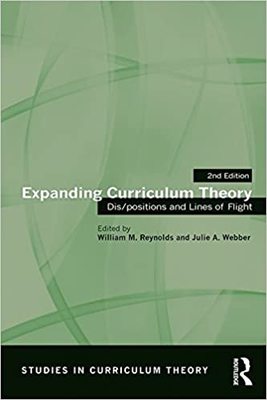
Expanding Curriculum Theory: Dis/positions and Lines of Flight
William M. Reynolds, Georgia Southern University and Julie Webber, Illinois State University
2004
Georgia Southern faculty member William M. Reynolds co-edited Expanding Curriculum Theory: Dis/positions and Lines of Flight.
-

Understanding Curriculum (Chinese Translation)
William F. Pinar, Louisiana State University; William M. Reynolds, Georgia Southern University; Patrick Slattery, Texas A&M University; and Peter M. Taubman
2003
Georgia Southern faculty member William M. Reynolds co-authored Understanding Curriculum.
-
Curriculum: A River Runs Through It
William M. Reynolds, Georgia Southern University
2003
Georgia Southern faculty member William M. Reynolds authored Curriculum: A River Runs Through It.
-
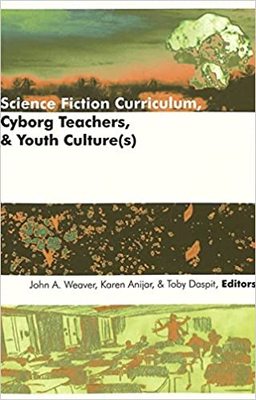
Science Fiction Curriculum: Cyborg Teachers and Youth Cultures
John A. Weaver, Goergia Southern University; Karen Anijar; and Toby Daspit
11-18-2003
Science Fiction Curriculum, Cyborg Teachers, and Youth Culture(s) is a collection of essays sutured together by their use of science fiction as a departure from contemporary educational «realities». The authors, inspired by the visions, styles, and insights of various science fiction texts, films, and rap music, seek to transform the future of educational possibilities. Science Fiction Curriculum offers alternative paths to current regressive educational practices, policies, and reforms, and invites readers to venture into uncharted dimensions.
-
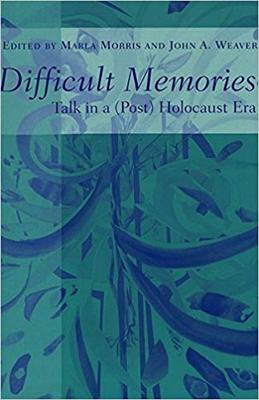
Difficult Memories: Talk in a (Post) Holocaust Era
Marla Morris, Georgia Southern University and John A. Weaver, Georgia Southern University
5-22-2002
Book Summary: Difficult Memories: Talk in a (Post) Holocaust Era attempts a difficult cross-cultural discussion. These scholars agree that the Holocaust is not just in the past – it is with us in memory. Professors and students alike – whether European, American, or Canadian, or whether Holocaust survivors – second or third generation Jews «after» the event are affected/effected by this haunting memory. Here scholars attempt to grapple with trauma, horror, anti-Semitism, hatred, murder, guilt, mourning, and anger – all the unthinkable subject matters that are usually squashed out of our curricula. The authors explore Holocaust issues via fiction, philosophy, ... Read more
-

Understanding Curriculum (Korean Translation)
William F. Pinar, Louisiana State University; William M. Reynolds, Georgia Southern University; Patrick Slattery, Texas A&M University; and Peter M. Taubman
2002
Georgia Southern faculty member William M. Reynolds co-authored Understanding Curriculum.
-

Understanding Curriculum: An Introduction to Historical and Contemporary Discourses
William F. Pinar, Louisiana State University; William M. Reynolds, Georgia Southern University; Patrick Slattery, Texas A&M University; and Peter M. Taubman
2002
Georgia Southern faculty member William M. Reynolds co-authored Understanding Curriculum: An Introduction to Historical and Contemporary Discourses.
-
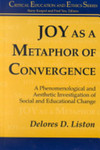
Joy as a Metaphor of Convergence: A Phenomenological and Aesthetic Investigation of Social and Educational Change
Delores D. Liston, Georgia Southern University
10-1-2001
Book Summary: Discusses a major purpose of education - the development of the capacity to interpret experience within a moral and spiritual framework. The metaphor of Joy enables the author to integrate themes of preciousness and meaning of life with processes that facilitate the quest for personal meaning.
-
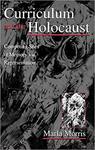
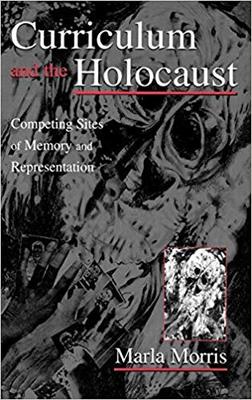
Curriculum and the Holocaust: Competing Sites of Memory and Representation
Marla Morris, Georgia Southern University
3-1-2001
Book Summary: In this book, Morris explores the intersection of curriculum studies, Holocaust studies, and psychoanalysis, using the Holocaust to raise issues of memory and representation. Arguing that memory is the larger category under which history is subsumed, she examines the ways in which the Holocaust is represented in texts written by historians and by novelists. For both, psychological transference, repression, denial, projection, and reversal contribute heavily to shaping personal memories, and may therefore determine the ways in which they construct the past. The way the Holocaust is represented in curricula is the way it is remembered. Interrogations of this ... Read more
-
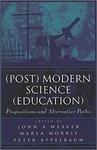
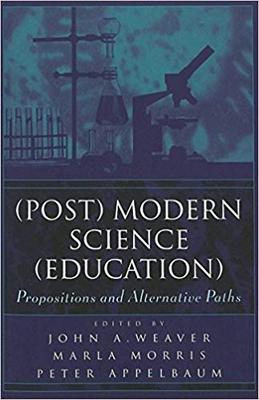
(Post) Modern Science (Education): Propositions and Alternative Paths
John A. Weaver, Georgia Southern University; Marla Morris, Georgia Southern University; and Peter M. Appelbaum, William Paterson University
10-1-2001
Book Summary: These original essays offer new perspectives for science educators, curriculum theorists, and cultural critics on science education, French post-structural thought, and the science debates. Included in this book are chapters on the work of Bruno Latour, Michel Serres, and Jean Baudrillard, plus chapters on postmodern approaches to science education and critiques of modern scientific assumptions in curriculum development.
-

Understanding Curriculum: An Introduction to Historical and Contemporary Discourses
William F. Pinar, Louisiana State University; William M. Reynolds, Georgia Southern University; Patrick Slattery, Texas A&M University; and Peter M. Taubman
2000
Georgia Southern faculty member William M. Reynolds co-authored Understanding Curriculum: An Introduction to Historical and Contemporary Discourses.
-
The Institution of Education
Mengert Fitz; Kathleen Casey; Delores D. Liston, Georgia Southern University; David Purpel; and H. Svi Shapiro
8-31-1994