Community Partners: Civilian Conservation Corps Oral History Interviews (Archived)
Archived Collection
This archived collection is retained solely for reference, research, or recordkeeping and is not actively developed, disseminated, or promoted as part of any ongoing University program, service, or activity. Learn more about archived collections (opens in new tab).
About the Collection
Collection preserves Civilian Conservation Corps oral history interviews.
Need Help?
To request an accessible version of any item in this archived collection, complete this form (opens in new tab) or email [email protected].
-
Interview with Forrest Fields
Armstrong Oral History Class
As in most of these interviews students asked about: hometown and life before CCC; joining the CCC; work, social life and training, education in CCC/at the Camp; military service in WWII; the New Deal/Roosevelt; the preservation of historic Ft. Pulaski; later life’s work. Also, Details of daily life in camp, including food, illnesses, buildings and people. Fields, at Ft. Pulaski 1938-1940 in particular describes: Fort when he arrived, truck driver and road work, barber shop, moving the cannon, survey work, pay, food, feeling at Roosevelt’s death, pranks, fight, behavior, crab fishing, mumps, hurricane, mosquitoes, and church service.
-
Interview with Freeman Moore
Armstrong Oral History Class
As in most of these interviews students asked about: hometown, family and life before CCC; joining the CCC; work, social life and training, education and leaves in CCC/at the Camp; military service in WWII; the New Deal/Roosevelt; later life’s work. Also, Details of daily life in camp, including food, illnesses, buildings and people. Moore in particular joined the CCC twice, the first time he chose to go to Roseburg, Oregon (on the troop train) and built bridges, fought fires for 6 months. When he joined again he did not get a choice and was sent to Ft Pulaski where he worked in motor shop, learned welding, automotive work that was later work at Kerr/McGee, Savannah. Promoted to asst. leader, then full leader for two years, allowed longer stay in CCC, Ft Pulaski 1938-1940 then transferred to Florida, Keystone Hatch. Describes visitors, tours, cannon, mumps, dentist, storm, pay, dances at Fort, car at Lazaretto Creek. Compares CCC Oregon and Georgia. Joined Army 1942.
-
Interview with John West
Armstrong Oral History Class
As in most of these interviews students asked about: hometown, family and life before CCC; joining the CCC; work, social life and training, education in CCC/at the Camp; military service in WWII; the New Deal/Roosevelt; later life’s work. Also, Details of daily life in camp, including food, illnesses, buildings and people. West who joined in 1940 in particular discusses work for CCC in Oregon, Camp Klamel? 2 miles outside of Murrel? OR. He did not work at Ft. Pulaski. Worked for Bureau of Reclamation, irrigation canals, truck driving, kitchen, fought forest fires. Received 16 certificates in industrial training, medic during War, learned to work more efficiently, “John’s Lever”, train ride from GA to Oregon, pay, reunions, CCC memorial at Pine Mountain, GA, worked at Union Camp in Savannah.
-
Interview with June Hopkins
Armstrong Oral History Class
June Hopkins (b. 1940) was a faculty member in the History Dept of (then) Armstrong State University from 1998-2016. Author of Harry Hopkins : Sudden Hero, Brash Reformer. (New York : St. Martin’s Press, 1999.) Hopkins is an authority on the New Deal era.
In this interview Dr. Hopkins provides context about Roosevelt, the New Deal and the CCC. Comparing the CCC to other programs, its implementation in the South, African Americans underrepresented in the program and the CCC's legacy, significance.
Hopkins' also addresses the importance of the oral history project with CCC members, "the heart of the story..from the perspective of those people who were the ones the programs were created for...the whole story."
-
Interview with Lance Hatten
Armstrong Oral History Class
Same interview as in "Lance Hatten and CCC reunion" but only the interview footage.
-
Interview with Lance Hatten and CCC reunion (2000)
Armstrong Oral History Class
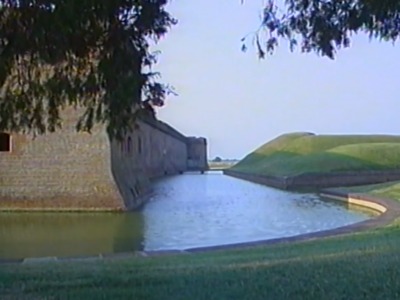
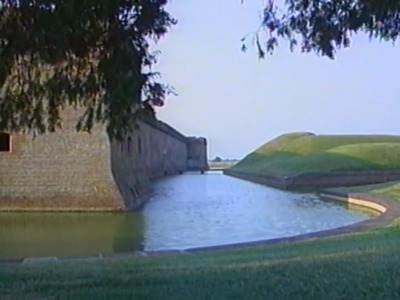
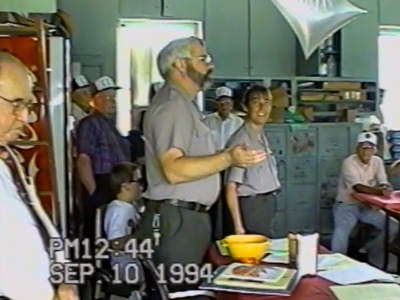
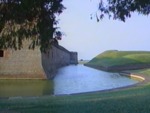
Lance Hatten was Chief Ranger at Fort Pulaski in 2000. His interview starts after about 13 minutes footage of the Fort (moat, shell damaged wall, cannon, and views). The 2000 CCC reunion footage begins at 37 minutes, after his interview. Hatten describes the significance, history of Fort Pulaski, its declaration as national monument, and disrepair. In 1933 transfer of Fort to National Park Service and beginning of CCC presence, CCC housing at Fort, legacy of CCC work at Fort, its significance to Fort and Park Service. Camp 460 annual reunions.
-
Interview with Reed Boyette
Armstrong Oral History Class
As in most of these interviews students asked about: hometown and life before CCC; joining the CCC; work, social life and education in CCC/at the Camp; military service in WWII; the New Deal/Roosevelt; the preservation of historic Ft. Pulaski; later life’s work. Also, Details of daily life in camp, including food, illnesses, buildings and people. Boyette in particular describes experience of Great Depression, work/poverty before camp, remembers the oath taken, chain of command at CCC, carpentry, trail making, famous visitors, Mr. Wren, being a Prisoner of War/POW and reunions. See the video log for details. Log’s time stamps reflect the correct order, but are not the times for this recording.
-
Interview with six CCC members
Armstrong Oral History Class
This video includes footage from each of six oral history interviews with members of the Civilian Conservation Corps (CCC) in this collection: Mr. Boyette, Mr. Fields, Mr. Johnson, Mr. Moore, Mr. Purvis, and Mr. West. Plus footage of photographs, starting at 54 minutes. No video log.
-
Interview with Tom Purvis
Armstrong Oral History Class
As in most of these interviews students asked about: hometown, family and life before CCC; joining the CCC; work, social life and training, education in CCC/at the Camp; military service in WWII; the New Deal/Roosevelt; later life’s work. Also, Details of daily life in camp, including food, illnesses, buildings and people. Purvis in particular discusses: Coming home from camp on leave and cars, work was pushing wheelbarrow, discipline, the PX, pay, going to Savannah, jokes, pranks, games, rabbit hunting, shrimping, fishing, buildings on the Island, reunions, the fig tree, Talmadge, radio programs, Wilbur Johnson and Mr. Dickerson.
-
Interview with Wilbur Johnson
Armstrong Oral History Class
As in most of these interviews students asked about: hometown, family and life before CCC; joining the CCC; work, social life and training, education and leaves in CCC/at the Camp; military service in WWII; the New Deal/Roosevelt; later life’s work. Also, Details of daily life in camp, including food, illnesses, buildings and people. Johnson Born April 16, 1916, joined CCC in 1934 stayed until 1940. About 5 minutes of interview is Johnson’s sister Lois O’Neil describing life at home during this period. Johnson discusses photograph of company 460, gaining weight, work in canals, cleaned out moat and stalls in Fort with shovels, work as cook for 5 years, learning to read from camp advisor Plunkin, starting with the menu, pay, mumps, leaves, meeting wife, work/pay at turpentine steel in Portal Ga, Captain Miller, Lieutenant Stern, Educational Advisor Plunkin and Wren. Also politics and voting, stuff found in moat, hunting rabbits, pet dongs, biscuits, deviled crab, previous cook stole food, pranks, renting boats, wife and daughters living on Barnard St, mumps.
-
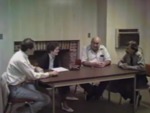
Interview with Jack Hood, Part I
National Park Service, Fort Pulaski National Monument
Jack Hood interview topics include Navy’s occupation of Cockspur Island, Jackson – park historian, Bar Pilots, Coast Guard, Army Air Corp, buildings, building removal, NPS boat, CCC, Williams – Williams’ Seafood (restaurant), Savannah transportation – buses, cattle cars, NPS property during WWII, early planning, cannon ball explosion, Ralston B. Lattimore, superintendents, wildlife, visitor center – Mission 66, exhibits, facilities projects, fort restoration, south channel bridge, docks, boats, cannons, railroad, island condition – vegetation, ditches and dikes – work, clearing exotic plants, lighthouse-keeper’s house, whitewash. Not mainly about CCC but included because Hood's long career at Fort Pulaski, related and of interest/importance.
-
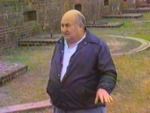
Interview with Jack Hood, Part II
National Park Service, Fort Pulaski National Monument
In Part II, Interview conducted “on location” at Fort Pulaksi.
Jack Hood interview topics include Navy’s occupation of Cockspur Island, Jackson – park historian, Bar Pilots, Coast Guard, Army Air Corp, buildings, building removal, NPS boat, CCC, Williams – Williams’ Seafood (restaurant), Savannah transportation – buses, cattle cars, NPS property during WWII, early planning, cannon ball explosion, Ralston B. Lattimore, superintendents, wildlife, visitor center – Mission 66, exhibits, facilities projects, fort restoration, south channel bridge, docks, boats, cannons, railroad, island condition – vegetation, ditches and dikes – work, clearing exotic plants, lighthouse-keeper’s house, whitewash. Not mainly about CCC but included because Hood's long career at Fort Pulaski, related and of interest/importance.
-
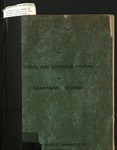
A statistical study of certain aspects of the social and economic pattern of Savannah, Georgia
Federal Works Agency, Work Projects Administration of Georgia
This report, digitized from Georgia Southern Libraries Special Collections, was published in 1941 by Georgia's WPA. Sponsored by the City of Savannah ; directed by W. Murdock Martin, project supervisor, it is included in the CCC Oral History interviews from Fort Pulaski because of related content.